
A seasonal guide
The Great Migration is a continuing movement through the Serengeti–Mara ecosystem, rather than a single annual event. Wildebeest, zebra and other grazers follow changing resources, and different groups can be spread across a wide area. Use the calendar to choose a starting region, then refine your route with current local reports.
| Usual window | Tanzania focus | What to plan for |
|---|---|---|
| January–March | Southern plains and Ndutu | Calving and large grazing herds; timing varies. |
| April–June | Central Serengeti and western areas | Moving herds; camp choice needs flexibility. |
| July–October | Northern Serengeti | Mara River area and possible crossings. |
| October–December | Routes south through central areas | Returning herds responding to fresh grazing. |
These broad windows follow Serengeti Balloon Safaris’ migration overview. TANAPA highlights January–February for calving on its official Serengeti guide. Rainfall can shift the pattern.
Choose your focus
Calving and open plains
Consider the southern ecosystem if you want time among grazing herds and their young.
- Build your trip around the seasonal southern base.
- Expect changing weather and animal distribution.
Northern migration
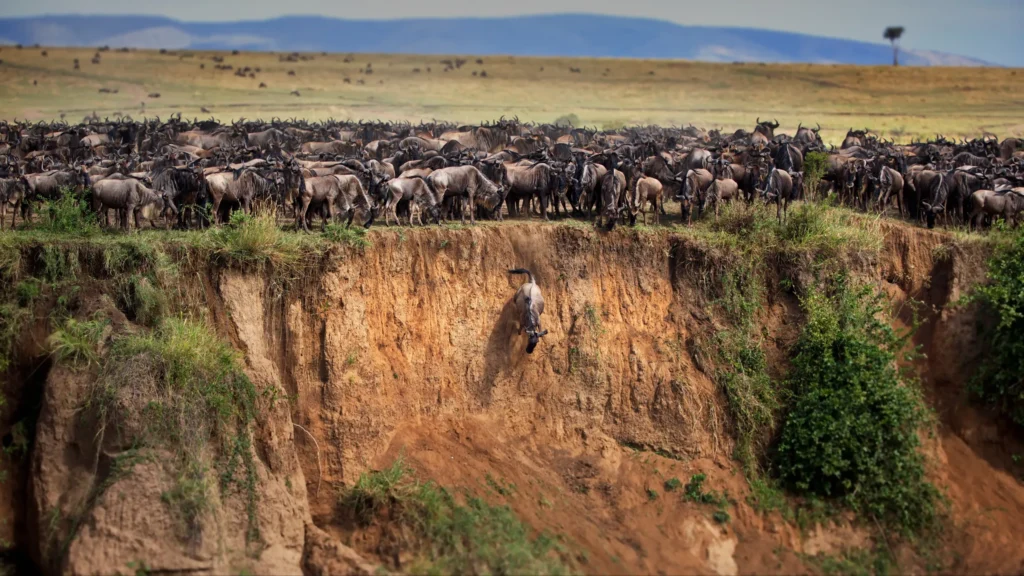
Consider the north if the Mara River landscape is your main interest.
- Allow repeated game drives in the area.
- Enjoy other wildlife while waiting for herd activity.
Your dates
Fixed holiday dates should guide the region you visit. Avoid choosing a camp first and expecting the migration to meet you there.
Your interests
Photographers may value herd formations and light as much as a dramatic crossing. Describe the scenes that matter to you.
Your patience
River watching can involve long stationary periods. A flexible day leaves room to follow your guide’s observations.
Your pace
Each move consumes time. Fewer well-chosen bases can give you more meaningful wildlife hours than a long list of stops.
Choose the right base
“Serengeti” on an itinerary does not tell you how close your camp is to the expected herds. Ask for the camp name, its location for your travel dates and a realistic estimate of daily driving. A central base and a northern base serve different journeys.
Mobile camps change locations seasonally, but they do not move each morning beside the animals. Permanent camps can also work well when their position matches your route. Confirm the exact camp before committing.
Our Serengeti destination guide explains the wider setting. Add other parks only after preserving enough time for your migration priority.
Allow room for uncertainty
A herd gathering beside a river may wait, move away or cross beyond your viewing point. Several days in the relevant area provide more opportunities to observe movement, but no operator can schedule wild animals. Avoid an itinerary sold around an exact crossing day.
Good viewing also depends on giving animals space. TANAPA’s Mara River crossing guidelines require vehicles to remain stationary in designated viewing areas when animals congregate and prohibit blocking their passage. Follow your guide’s instructions and the posted controls.
Build a realistic route
Start with a migration-focused outline, such as our six-day Great Migration safari, and ask how its camps and transfers would change for your dates. The published duration is a starting point; the final route needs to fit the season.
- Choose one main priority: calving, moving herds or the northern river landscape.
- Share your dates, party size, accommodation preference and tolerance for long drives.
- Check nights in each region, transfer arrangements and actual game-drive time.
- Confirm the named camps, inclusions and what flexibility is available before booking.
Read our Tanzania seasonal guide alongside the migration plan, then request a tailored itinerary with your preferred experience clearly stated.
Migration questions
Is February a guaranteed calving date?
No. Early-year travel usually aligns with the southern calving period, but births and herd locations vary. Choose a suitable region and allow time to explore.
Must I go to Kenya for a crossing?
No. The Mara River also runs through northern Serengeti. Viewing in either country depends on herd location, access and conditions on the day.
Can I see migration from a central camp?
Possibly, during movement through central areas. A central camp should not be assumed to provide convenient access to the far north or the southern calving grounds.
Should I change camps every night?
Usually, a slower base makes observation easier. Ask whether each proposed move improves access to the expected herds enough to justify the transfer time.