
Who should choose November?
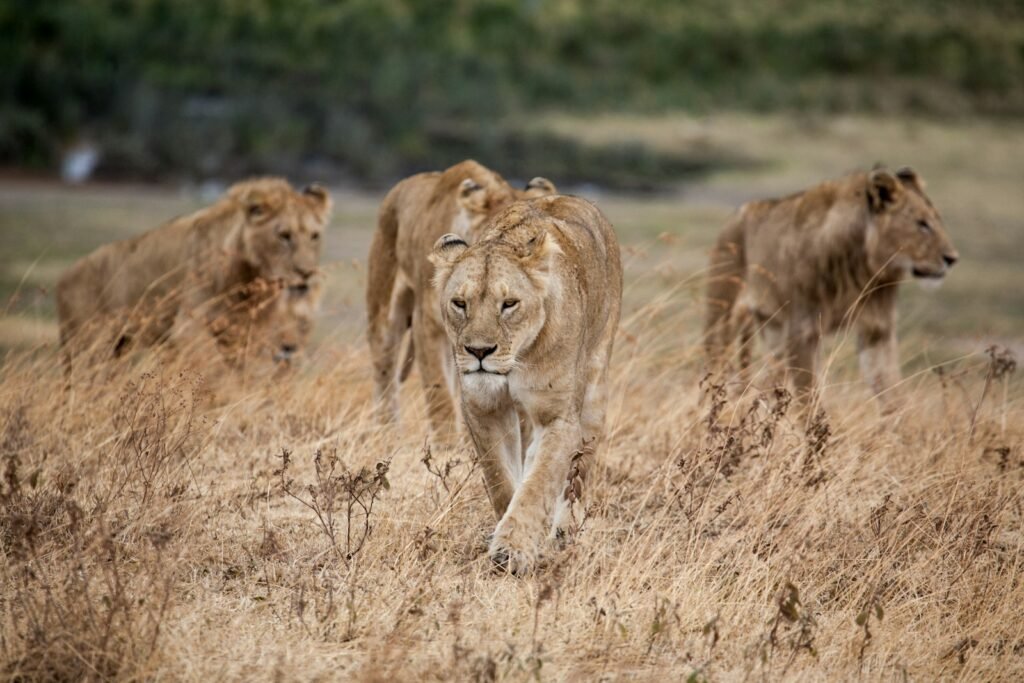
Start with your travel style, rather than a label such as low season. November suits travelers who enjoy changing skies, green scenery and wildlife observation beyond a checklist. It also works for returning visitors who can appreciate a different version of familiar parks. For a first trip, a well-paced route matters more than fitting every park onto the map.
Flexible interests
Enjoy resident wildlife and landscapes even when migrating herds are elsewhere.
Time to settle
Stay multiple nights so one wet drive does not define a destination.
Practical comfort
Accept mud, damp clothing and occasional changes to the day’s plan.
Clear priorities
Tell your planner whether photography, cats, birds or a quieter pace comes first.
Weather on a Tanzania safari in November
November falls within the usual short-rain period in northern Tanzania. That is a seasonal pattern, not a forecast for your travel week. Rain may begin earlier or later, and a shower at one lodge says little about conditions several hours away. Avoid building a trip around the claim that rain always arrives briefly after lunch.
Rain can interrupt a drive, soften tracks or obscure a view. It can also leave long usable periods for exploring. Pack for both outcomes. The highlands and crater rim need warmer layers than the plains; coast-bound travelers should expect a much hotter, more humid setting. Our best time to visit guide puts these differences into the wider year.
Choose parks for variety and usable time
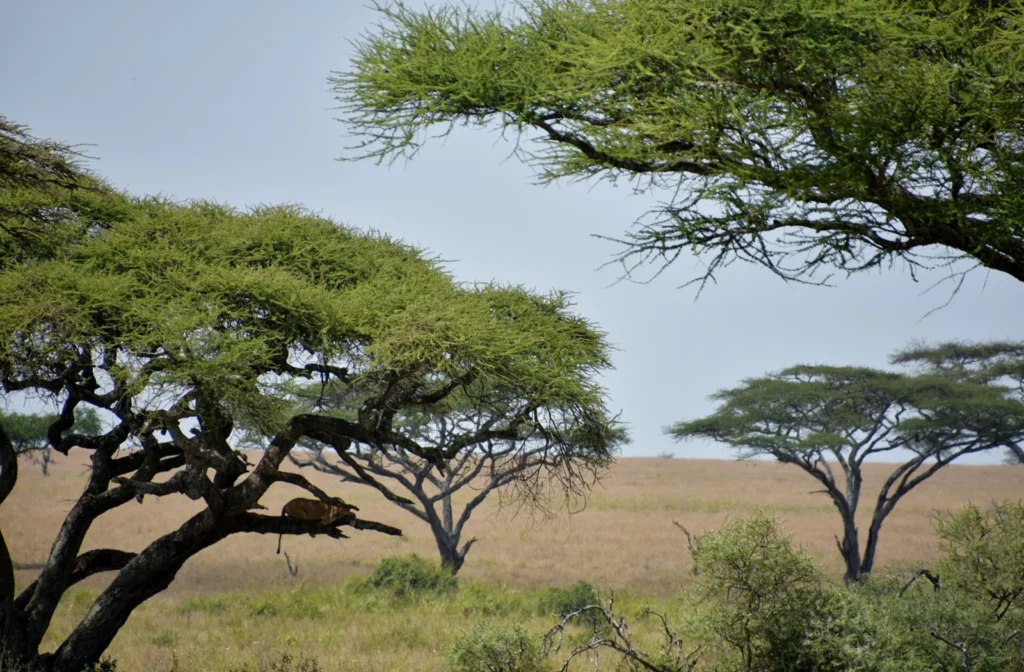
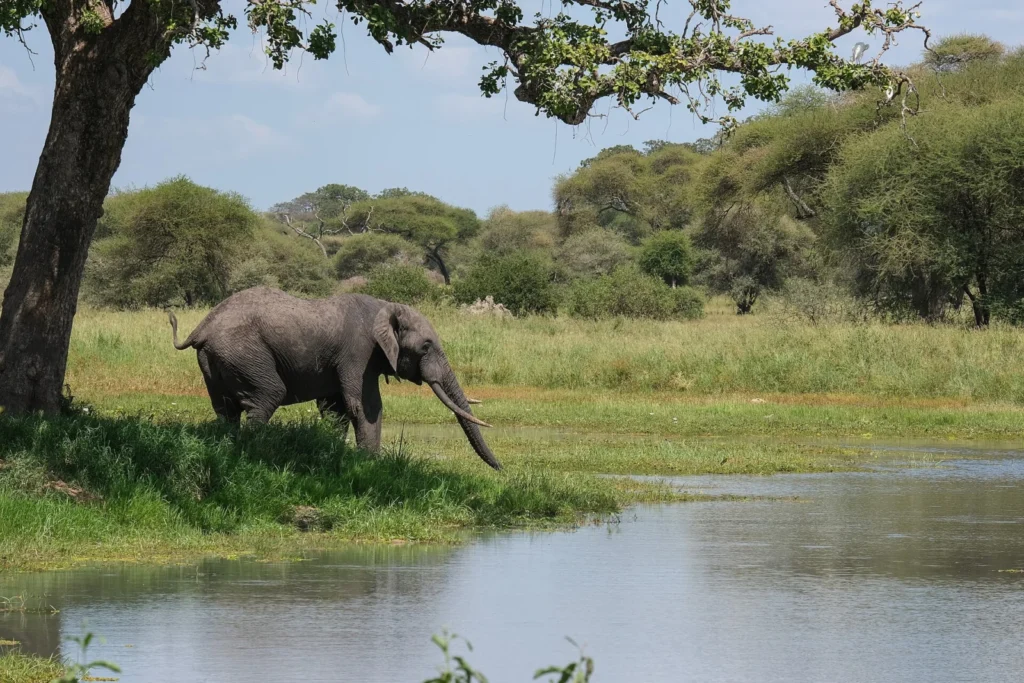
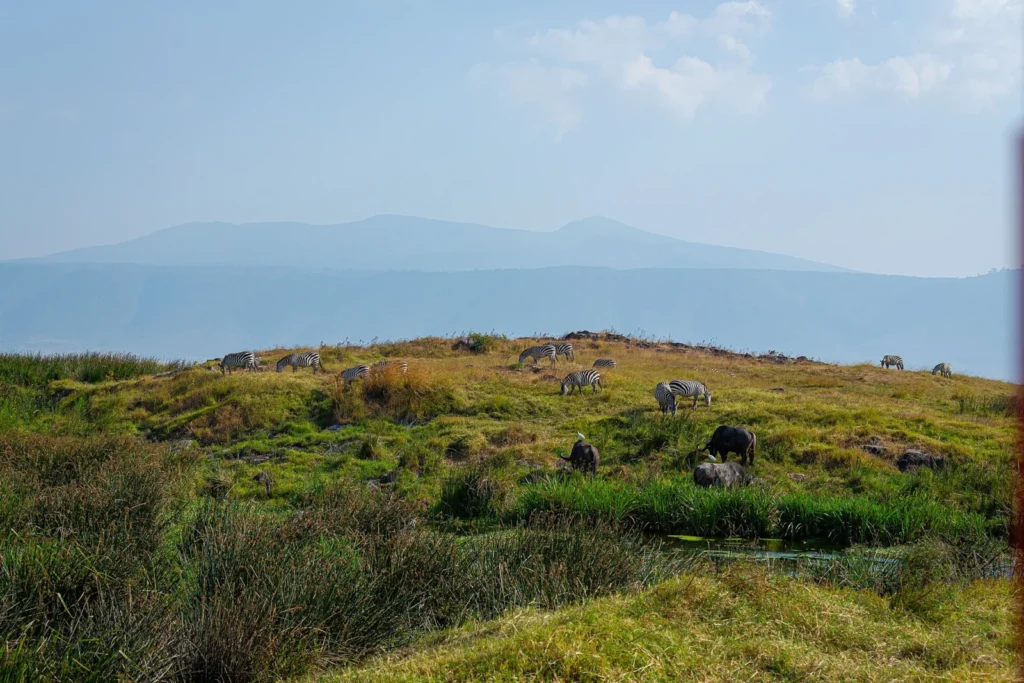
A northern route can combine contrasting habitats without making every day a relocation. Central Serengeti offers a resident-wildlife focus alongside any migration possibilities. Ngorongoro adds a distinct crater landscape, while Tarangire can suit travelers who want woodland and elephants. Its famous dry-season river concentrations disperse as water and grazing spread, so do not expect an October scene repeated in November.
| Area | Reason to include it | Planning question |
|---|---|---|
| Central Serengeti | Resident wildlife and several game-drive directions | How many full drives fit between transfers? |
| Ngorongoro | A different landscape and crater visit | Where do we sleep before the descent? |
| Tarangire | Woodland, elephants and varied scenery | Does it add variety without shortening Serengeti? |
Choose the combination that protects viewing time. Adding a park is useful only if the journey leaves enough time to explore it.
Treat the migration as a moving possibility
The herds respond to rainfall and fresh grazing. November can be a transition toward the southern plains, but a calendar illustration cannot tell you where animals will be during your stay. Locking every night in a distant corner solely because a diagram places an arrow there creates unnecessary risk.
Use the Great Migration guide to understand the cycle, then ask how recent observations will inform daily drives. Changing a drive direction is easier than changing booked camps, boundaries or flights.
Build a route with room to adapt
For seven calendar days including arrival and departure, a sensible outline is arrival and rest on day one, a transfer toward the northern parks on day two, three nights based in the Serengeti, a return toward the highlands on day six and a crater visit or departure arrangement only if the final flight permits it. A late international departure and an overnight airport stay produce very different options.
Do not treat this outline as a timed driving promise. Ask the planner to identify actual game drives, transit days and contingency time before confirming it. The five-day low-season safari is a starting point for a discussion; add arrival and departure days around the published tour and confirm its November routing.
Understand what flexibility actually means
Flexible planning means agreeing practical choices in advance. It does not mean that any wet track can be driven or that a guide can enter every protected area without additional arrangements. Daily access decisions should follow conditions, local rules and your guide’s judgment.
Useful flexibility
Two or more nights in one area, alternative drive loops and realistic transfer margins give a guide options when conditions change.
Fragile planning
One-night stops, a different distant park each day and a tight flight connection leave little space to respond to weather.
For tented accommodation, ask about covered communal areas, paths between rooms and dining, and how bags remain dry during transfers. These details often matter more than a seasonal slogan.
Compare value using the full itinerary
Some November departures may offer attractive accommodation rates, but savings depend on the property, room category and exact dates. Park charges, vehicles, guides and flights still contribute to the total. A lower room rate can disappear into extra transfers or a route that needs more nights to work.
Request like-for-like quotes with the same occupancy, meal arrangements and park nights. Check what happens if a transfer changes and whether optional activities are refundable when weather intervenes. The safari cost guide helps you compare the main budget drivers. Favor useful nights in the right places over a longer list of inclusions that consumes your time.
Pack for wet moments and cool mornings
- Protect essentials. Bring a waterproof inner bag for documents and electronics, plus a simple cover for your day bag.
- Wear adaptable layers. Quick-drying clothes, a light rain shell and a warm fleece cover more situations than heavy single-purpose clothing.
- Plan for the vehicle. Keep binoculars, water and a dry cloth within reach instead of buried in your main luggage.
- Check flight rules. If small-aircraft transfers are included, confirm baggage weight, size and bag-type limits with the actual carrier.
Use the complete safari packing list, then edit it to your accommodation and transport. Leave space to separate damp items rather than carrying an outfit for every possible shower.
Common questions
Does it rain all day in November?
Uninterrupted rain is not the defining pattern, but longer wet spells can occur. Prepare for variable conditions instead of assuming every shower will be short or arrive at a convenient time.
Is November too early for southern Serengeti herds?
It can be early for a fixed southern-herd itinerary. Movement depends on rainfall and grazing. Choose accommodation areas using seasonal knowledge and current observations, with resident wildlife also part of the plan.
Will a November safari be cheaper?
It may be, depending on the camps and dates. Compare full quotes rather than room rates alone, and confirm inclusions before treating the month as a budget decision.
Is November suitable for a first safari?
Yes, for travelers comfortable with uncertainty. A patient pace, a capable guide and realistic expectations help. If dry conditions are your overriding priority, compare other travel windows before booking.
Make November work around your priorities
Share your dates, preferred pace and tolerance for rain through our enquiry form. Ask for a route that explains its camp locations, protects viewing time and includes a clear response to changing conditions.
Sources and planning notes
Reviewed for the November 2026 to April 2027 travel season. Seasonal patterns are guidance, not a forecast. Confirm current conditions, availability and travel requirements before booking.
- Tanzania climate and regional differences
- Tanzania Tourist Board: Serengeti wildlife and habitats
- Ndutu: migration and rainfall relationship
Image credits
- Serengeti landscape (5) (28631238305).jpg — Richard Mortel from Riyadh, Saudi Arabia / Wikimedia Commons · CC BY 2.0. Resized to WebP; display crop may apply.
- Single Wild Elephant at a lake.jpg — Maximilian Staub / Wikimedia Commons · CC BY 4.0. Resized to WebP; display crop may apply.
- Landscape with zebras and buffalos in ngorongoro crater.jpg — Rasheedhrasheed / Wikimedia Commons · CC BY-SA 4.0. Resized to WebP; display crop may apply.