
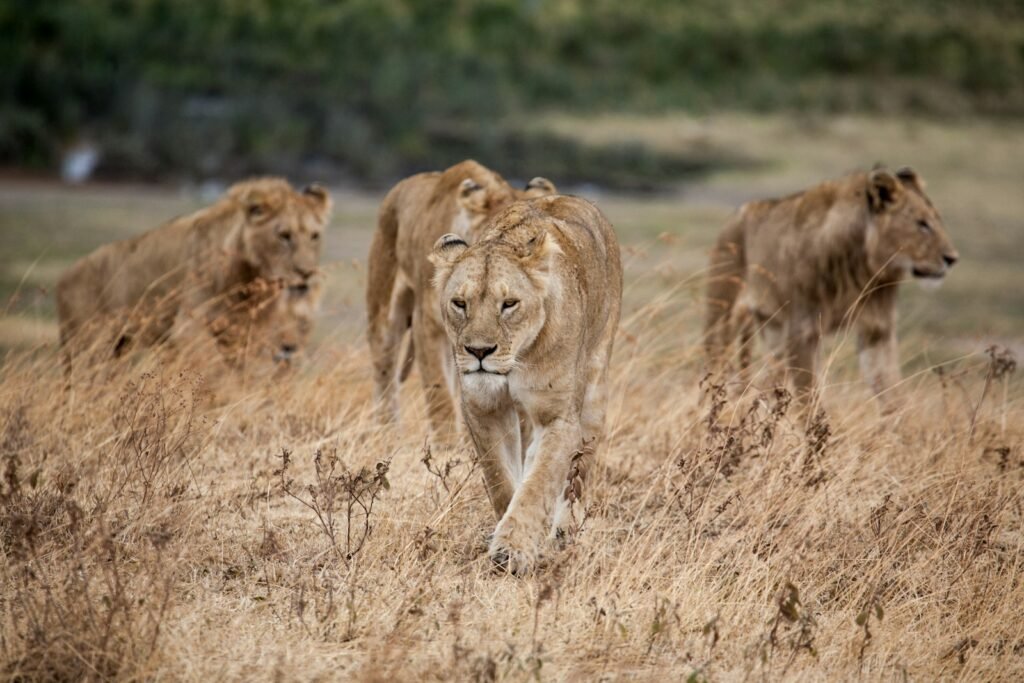
The Great Migration month by month
The Great Migration is a continuing movement of roughly a million and a half wildebeest, with zebra and gazelle, through the Serengeti–Mara ecosystem. It is not a single event. Groups spread across a wide area, and in any month some herds run ahead of or behind the pattern below. Use the table to choose a starting region, then refine the camp with current reports from the ground.
| Month | Usual area | What is happening | Our guide |
|---|---|---|---|
| January | Southern Serengeti, Ndutu, Ngorongoro Conservation Area | Herds settle on the short-grass plains; calving begins. | January safari |
| February | Ndutu and the southern plains | Peak calving, with predators close by. | Ndutu calving |
| March | Southern plains | Calves grow; herds start drifting as the grass dries. | March safari |
| April | Southern to central Serengeti | Long rains; herds begin moving north-west. | April safari |
| May | Central Serengeti (Seronera, Moru Kopjes) | Long columns on the move; rutting season. | – |
| June | Western Corridor | Gathering near the Grumeti River; possible Grumeti crossings. | – |
| July | Western Corridor to northern Serengeti | First herds reach the Mara River; crossings can begin. | July safari |
| August | Northern Serengeti (Kogatende, Lamai) and Masai Mara | Peak Mara River crossing period, in both directions. | August safari |
| September | Northern Serengeti and Masai Mara | Crossings continue as herds move back and forth. | Mara River crossings |
| October | Northern Serengeti | Herds start turning south as early rains approach. | – |
| November | Eastern and central Serengeti (Lobo, Seronera) | Moving south with the short rains. | November safari |
| December | Central to southern Serengeti | Arriving back on the southern plains. | December safari |
These broad windows follow Serengeti Balloon Safaris’ migration overview. TANAPA highlights January–February for calving on its official Serengeti guide. Rainfall can shift the pattern.
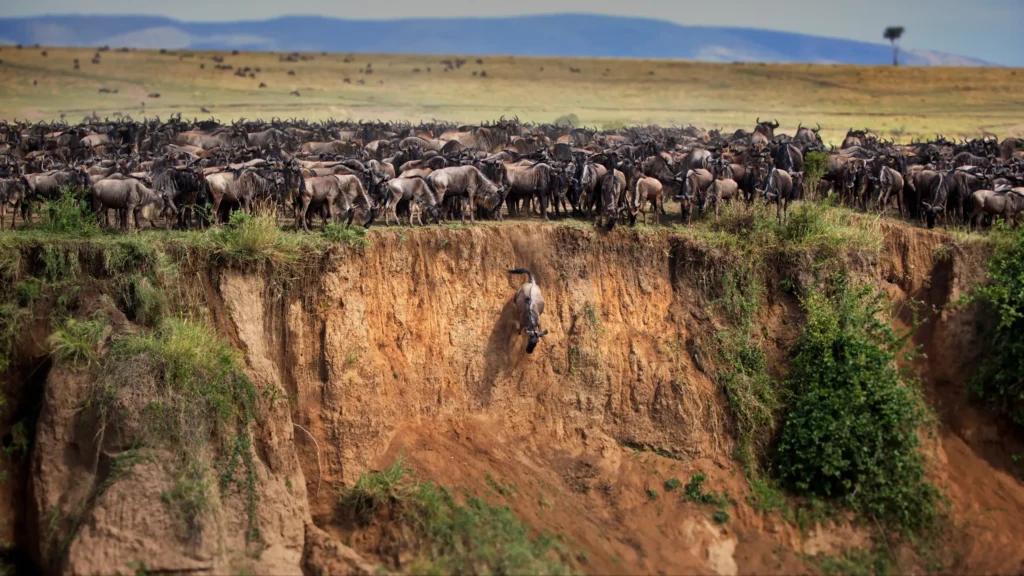
Best place to see the Great Migration
There is no single best place. The best place is the area where the herds usually are during your travel dates, and the part of the migration story you most want to see.
For calving and predators
Ndutu and the southern Serengeti, January–March. Huge herds stay in one area for weeks, which makes them easier to find than at any other time. Read our Ndutu calving safari guide.
For river crossings
Northern Serengeti, July–October. The Mara River near Kogatende and Lamai is quieter than the Kenyan side. Read Mara River crossings in 2027.
For herds on the move
Central Serengeti and the Western Corridor, May–June. Long columns of wildebeest and the Grumeti River, with fewer vehicles than the north.
For a first safari
Central Serengeti, any month. Resident wildlife is good all year, and the herds pass through twice. It also combines easily with Ngorongoro.
Serengeti or the Masai Mara? Both see crossings. Tanzania offers a larger area and more of the yearly cycle; Kenya’s Mara is compact and busy in peak months. See Tanzania vs Kenya for a full comparison.
Choose your focus
Calving and open plains
Consider the southern ecosystem if you want time among grazing herds and their young.
- Build your trip around the seasonal southern base.
- Expect changing weather and animal distribution.
Northern migration
Consider the north if the Mara River landscape is your main interest.
- Allow repeated game drives in the area.
- Enjoy other wildlife while waiting for herd activity.
Your dates
Fixed holiday dates should guide the region you visit. Avoid choosing a camp first and expecting the migration to meet you there.
Your interests
Photographers may value herd formations and light as much as a dramatic crossing. Describe the scenes that matter to you.
Your patience
River watching can involve long stationary periods. A flexible day leaves room to follow your guide’s observations.
Your pace
Each move consumes time. Fewer well-chosen bases can give you more meaningful wildlife hours than a long list of stops.
Choose the right base
“Serengeti” on an itinerary does not tell you how close your camp is to the expected herds. Ask for the camp name, its location for your travel dates and a realistic estimate of daily driving. A central base and a northern base serve different journeys.
Mobile camps change locations seasonally, but they do not move each morning beside the animals. Permanent camps can also work well when their position matches your route. Confirm the exact camp before committing.
Our Serengeti destination guide explains the wider setting. Add other parks only after preserving enough time for your migration priority.
Allow room for uncertainty
A herd gathering beside a river may wait, move away or cross beyond your viewing point. Several days in the relevant area provide more opportunities to observe movement, but no operator can schedule wild animals. Avoid an itinerary sold around an exact crossing day.
Good viewing also depends on giving animals space. TANAPA’s Mara River crossing guidelines require vehicles to remain stationary in designated viewing areas when animals congregate and prohibit blocking their passage. Follow your guide’s instructions and the posted controls.
Build a realistic route
Start with a migration-focused outline, such as our six-day Great Migration safari, and ask how its camps and transfers would change for your dates. The published duration is a starting point; the final route needs to fit the season.
- Choose one main priority: calving, moving herds or the northern river landscape.
- Share your dates, party size, accommodation preference and tolerance for long drives.
- Check nights in each region, transfer arrangements and actual game-drive time.
- Confirm the named camps, inclusions and what flexibility is available before booking.
Read our Tanzania seasonal guide alongside the migration plan, then request a tailored itinerary with your preferred experience clearly stated.
Migration questions
Is February a guaranteed calving date?
No. Early-year travel usually aligns with the southern calving period, but births and herd locations vary. Choose a suitable region and allow time to explore.
Must I go to Kenya for a crossing?
No. The Mara River also runs through northern Serengeti. Viewing in either country depends on herd location, access and conditions on the day.
Can I see migration from a central camp?
Possibly, during movement through central areas. A central camp should not be assumed to provide convenient access to the far north or the southern calving grounds.
What is the best month to see the Great Migration?
It depends on what you want to see. February is best for calving and predator action on the southern plains. August is usually the busiest period for Mara River crossings. Both months book up early.
How many days do I need?
Allow at least three nights in the migration area itself, plus travel days. Our guide to safari length explains how to fit other parks around this.
Should I change camps every night?
Usually, a slower base makes observation easier. Ask whether each proposed move improves access to the expected herds enough to justify the transfer time.