
What makes February different?
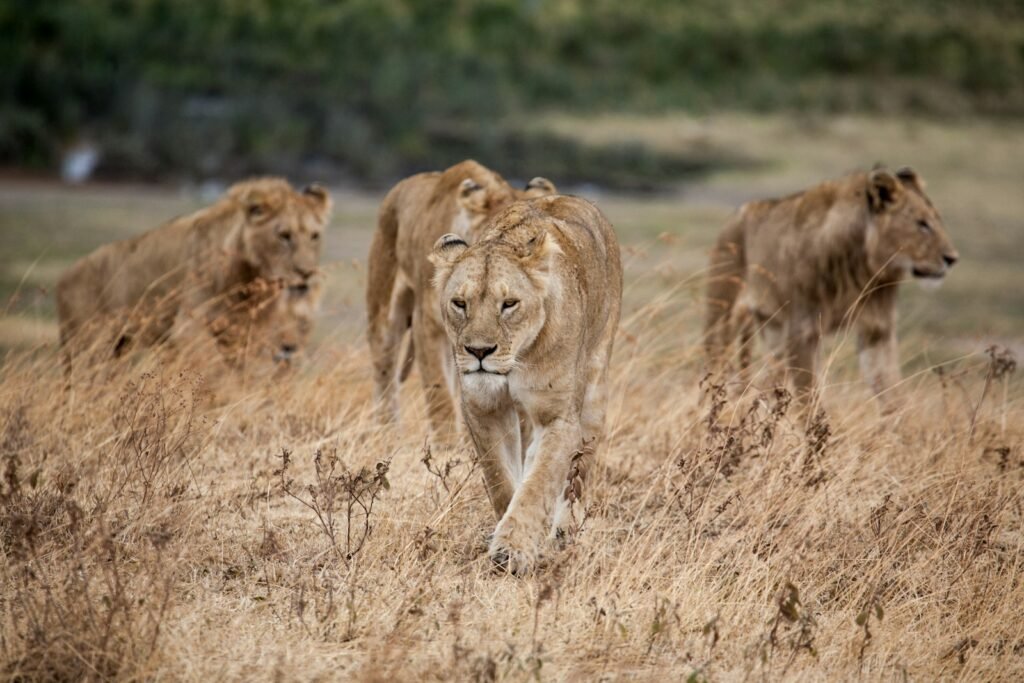
February offers more than a single migration spectacle. You can combine open plains, wooded elephant country and the crater landscape without planning every day around moving herds. That variety makes it useful for first visits and for companions with different interests.
Seasonal focus
The southern plains deserve attention if migration is your main aim.
Resident wildlife
Central Serengeti remains a worthwhile destination in its own right.
Weather balance
Pack for sunshine, rain and cool early starts on the same trip.
Demand
Popular southern camps can be busy. February is not automatically a bargain month.
Our seasonal planning guide helps compare February with other travel windows.
Best parks for a Tanzania safari in February
| Area | Main reason to include it | Planning tradeoff |
|---|---|---|
| Southern Serengeti and Ndutu | Migration herds and young wildebeest, when present | Choose the camp area carefully; movements vary |
| Central Serengeti | Resident wildlife and varied habitats | Allow time to explore beyond a transfer drive |
| Ngorongoro Crater | Wildlife in a distinctive compact landscape | A separate descent needs its own time and arrangements |
| Tarangire | Elephants, baobabs and woodland scenery | Wet-season wildlife is less concentrated at the river |
| Lake Manyara | Forest, lake scenery and birding interest | Choose for habitat variety, not a promised rare sighting |
Use this comparison to set priorities, not to collect park names. Two well-chosen areas with unhurried game drives can be more satisfying than a circuit dominated by check-ins and road transfers.
Southern Serengeti and Ndutu for the migration
Southern Serengeti and the wider Ndutu area are the usual starting point for February migration planning. Fresh grazing can draw large herds, and wildebeest births often concentrate in late January and February. Rainfall and pasture determine the actual pattern; neither a birth nor a predator hunt can be scheduled.
Choose several nights near the relevant wildlife area if this is the central purpose of your trip. A brief pass through the plains leaves little room to respond to changing conditions. Read the Great Migration guide before choosing camp locations.
Central Serengeti and Ngorongoro add balance
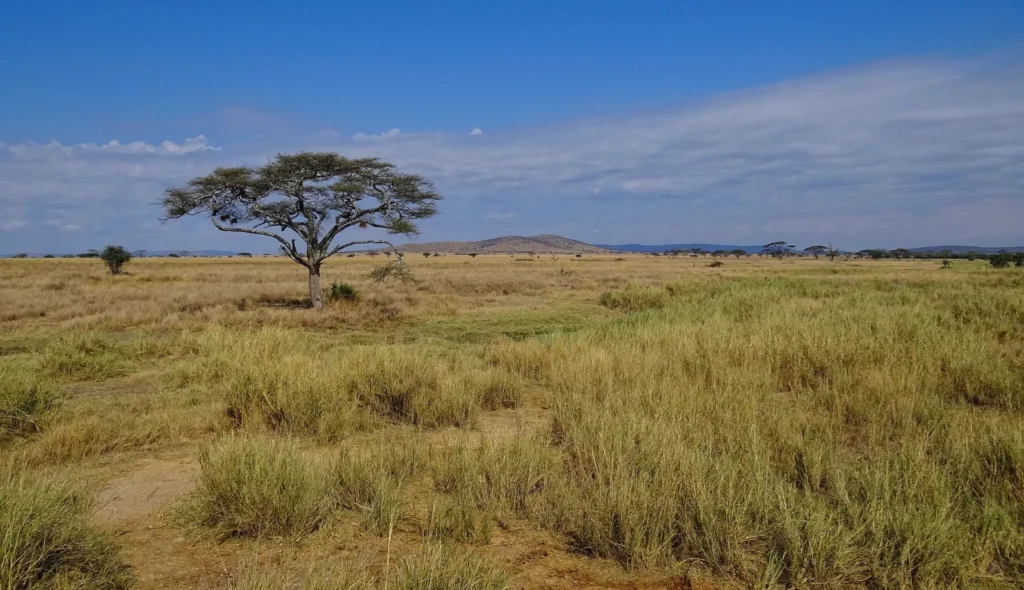
A stay in Serengeti National Park need not depend entirely on the migration. Central areas offer resident wildlife and a different mix of grassland, rocky outcrops and riverine habitat. Include full game-drive time there if you want the place to feel like a destination rather than a road connection.
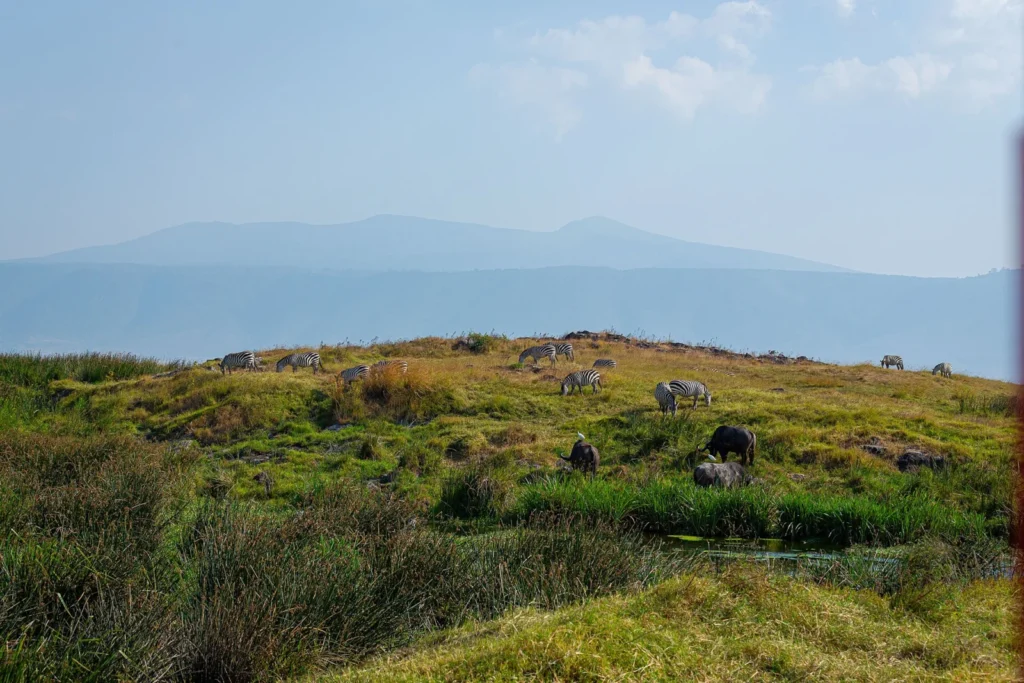
Ngorongoro adds a distinct landscape and a chance to observe several species within the crater ecosystem. Sightings still require patience and luck. Keep the descent separate from the transfer to your next base, and take a warm layer for a highland overnight. The crater rim can feel markedly colder than the plains.
When Tarangire and Manyara earn their place
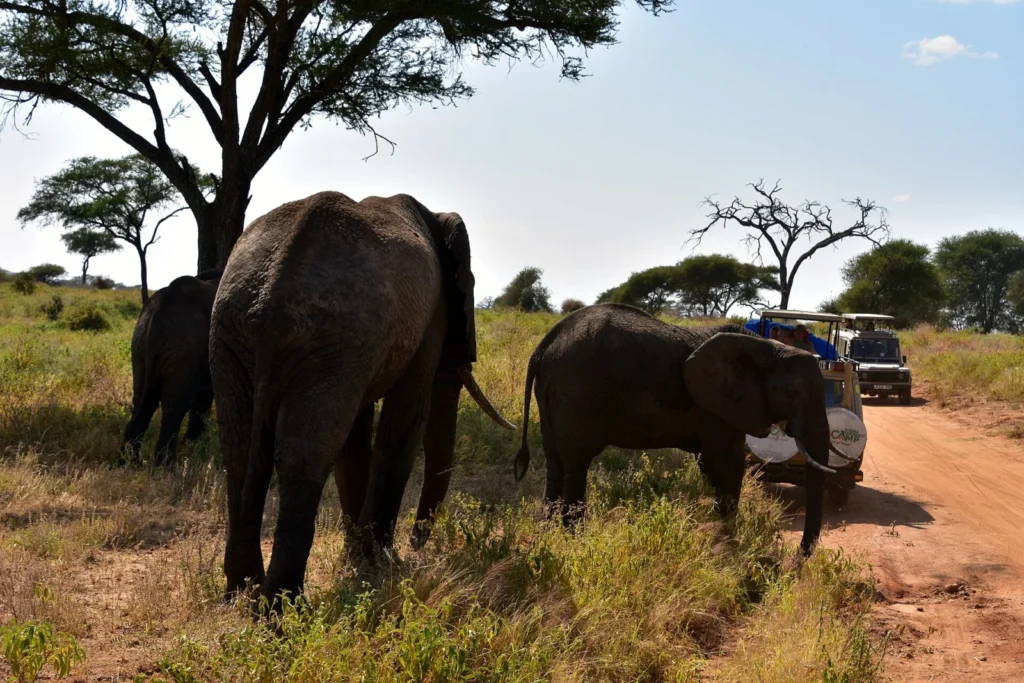
Tarangire suits travelers who value elephant behavior, baobab scenery and time in a different habitat. During wetter months, animals have water and grazing beyond the dry-season river corridor, so familiar images of dense riverside gatherings should not set your February expectations. Resident wildlife remains, and watching one elephant family can justify a patient morning.
Lake Manyara can add forest and lakeside scenery, particularly for travelers interested in birds and habitat changes. Include it because that experience appeals to you, rather than as a compulsory stop or a promise of tree-climbing lions. If days are limited, spend the extra night in your main wildlife area instead of squeezing in another gate.
Build a route with enough wildlife time
For a first northern journey, consider eight calendar days: arrival and an Arusha overnight on day one; Tarangire and a nearby overnight on day two; a crater visit and highland overnight on day three; transfer to southern Serengeti or Ndutu on day four; two full wildlife days on days five and six; return toward Arusha on day seven; and departure on day eight. Exact routing depends on your accommodation, road conditions and flight times.
To add central Serengeti meaningfully, extend the journey or remove another stop. Review the seven-day northern circuit safari as a discussion starting point, then confirm which arrival, departure and transfer days are included.
Budget and pack for the actual route
February prices vary with the camp, location and travel dates. A camp positioned for the southern migration may attract strong demand, while another property has a different rate pattern. Compare complete quotations rather than a headline nightly price. Vehicle arrangements, meals, park permissions, transfers and the number of useful game-drive hours all affect value.
- Clothing: Bring light layers, a warm fleece and a waterproof shell.
- Equipment: Protect cameras and documents from rain and dust.
- Flights: Confirm the actual carrier’s baggage rules before packing.
- Comfort: Tell your planner about long-drive tolerance and mobility needs.
Use the safari packing list to finish your bag.
Make the booking decision in the right order
Four decisions before confirming
- Rank migration, resident wildlife, elephants and scenery in your own order.
- Choose the main area and reserve enough nights for full wildlife days.
- Check the named camp location, boundary permissions and complete transfer plan.
- Confirm inclusions, booking terms and a sensible alternative if conditions change.
Photographers may prefer fewer bases and repeat visits to one area. Families may value a gentler pace and time at camp. Tell your planner which compromise you would rather make before a route is finalized; the number of parks alone says little about the quality of the week.
Common questions
Is February guaranteed to be dry?
No. Northern Tanzania often has a relatively drier interval between rainy seasons, but showers and heavier rain remain possible. Plan from seasonal patterns, then check current conditions near departure.
Must every February safari include Ndutu?
No. Ndutu is especially relevant to a southern migration focus. A trip centered on resident Serengeti wildlife, Ngorongoro and Tarangire can still make sense when those experiences suit you better.
Will we see wildebeest giving birth?
Births are possible around the seasonal calving period, but timing and location vary. Several nights in the right area improve your opportunity to observe the herds without guaranteeing a particular event.
Is February suitable for a first safari?
Yes, provided the route matches your interests and allows proper wildlife time. Choose a comfortable pace and realistic expectations rather than trying to include every northern park.
Choose your February priorities first
February works best when the route has a clear purpose. Give the southern plains time if migration matters most, or build a wider wildlife journey with resident Serengeti animals, the crater and Tarangire. Share your dates, interests and preferred pace through our enquiry form so the proposal can reflect the trip you actually want.
Sources and planning notes
Reviewed for the November 2026 to April 2027 travel season. Seasonal patterns are guidance, not a forecast. Confirm current conditions, availability and travel requirements before booking.
- Tanzania climate and regional seasonality
- Ndutu migration and calving patterns
- TANAPA Tarangire wildlife and habitats
Image credits
- Serengeti-Landscape-2012.JPG — Bjørn Christian Tørrissen / Wikimedia Commons · CC BY-SA 3.0. Resized to WebP; display crop may apply.
- Landscape with zebras and buffalos in ngorongoro crater.jpg — Rasheedhrasheed / Wikimedia Commons · CC BY-SA 4.0. Resized to WebP; display crop may apply.
- Elephants, Tarangire National Park (30) (28592788662).jpg — Richard Mortel from Riyadh, Saudi Arabia / Wikimedia Commons · CC BY 2.0. Resized to WebP; display crop may apply.
- Wildebeest Migration in Serengeti National Park, Tanzania.jpg — Daniel Rosengren / Wikimedia Commons · CC BY 4.0. Resized to WebP; display crop may apply.