Tanzania weather in July
July is in the middle of Tanzania’s main dry season. The Tanzania Meteorological Authority describes June to September as dry months across the country, after the long rains of March to May. Expect blue skies, low humidity and dusty tracks.
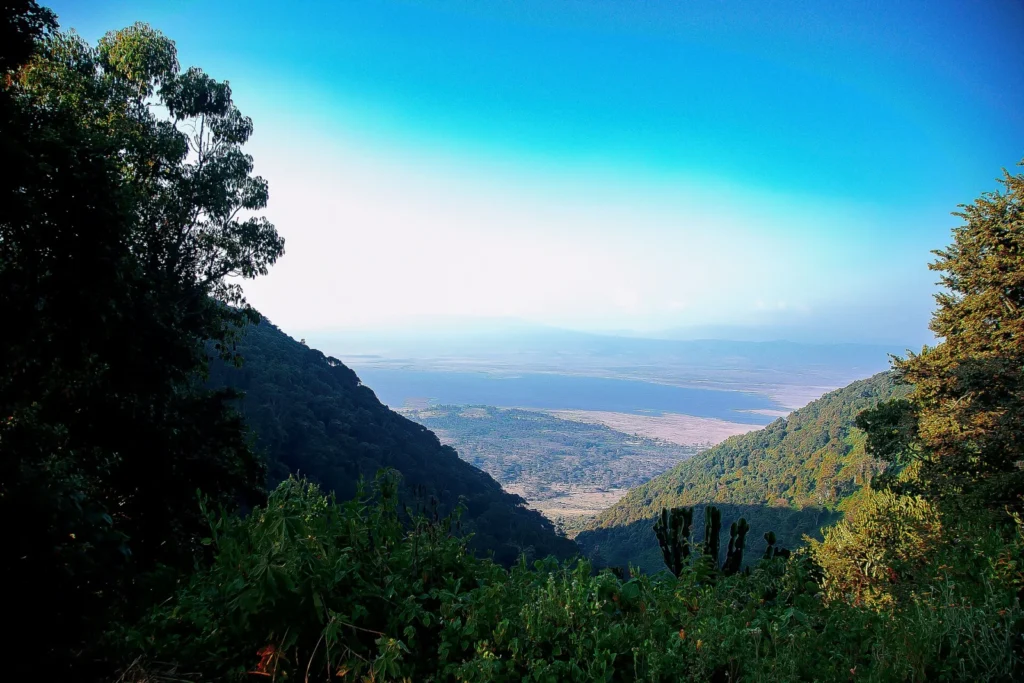
Temperatures depend on altitude. Tanzania National Parks (TANAPA) gives a temperature range of 15–30°C for the Serengeti. Higher areas such as the Ngorongoro crater rim and Karatu are noticeably colder after dark and at dawn, so warm layers are essential in an open safari vehicle.
| Area | What to expect | Source |
|---|---|---|
| Whole country | Dry season (June–September) | Tanzania Meteorological Authority |
| Serengeti | 15–30°C range; cool mornings, warm afternoons | Tanzania National Parks (TANAPA) |
| Ngorongoro highlands | Cold mornings and nights on the crater rim | Our guides’ experience |
| Kilimanjaro | Dry season: cool nights, clear days | TANAPA’s Kilimanjaro guide |
| Zanzibar | Average 21.0–28.6°C, about 4 mm of rain over 5 rain days | World Meteorological Organization |
Where the Great Migration is in July
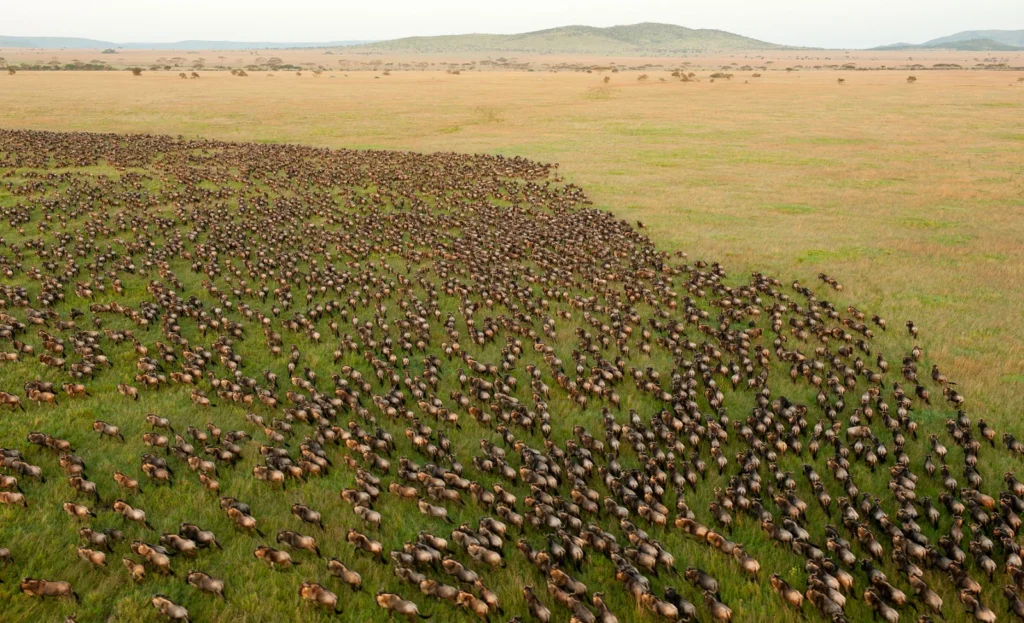
The Serengeti migration is huge. Tanzania National Parks (TANAPA) describes over 1.5 million wildebeest moving with hundreds of thousands of zebra, gazelle and eland. The UNESCO World Heritage Centre describes a circular trek of about 1,000 km across Kenya and Tanzania.
In the dry season, water decides where the herds go. TANAPA’s Mara River crossing guidelines explain that the Mara River is the only water source in the Serengeti that can sustain the Great Migration through the dry season. That is why July plans usually focus on the northern Serengeti, near Kogatende and the Mara River.
In early July, some herds may still be in the Western Corridor or central Serengeti on their way north. River crossings can begin in July, but their timing changes every year and nobody can guarantee one. A good plan splits your nights between central and northern Serengeti, so you see plenty of wildlife whatever the herds do. Our Great Migration month-by-month guide shows the full yearly pattern, and Mara River crossings in 2027 explains how crossing days work.
Best parks for a July safari
| Park | Why go in July |
|---|---|
| Northern Serengeti | Herds move towards the Mara River, the park’s only dry-season water for the migration. |
| Central Serengeti | Strong resident wildlife all year, with big cats and herds passing through. |
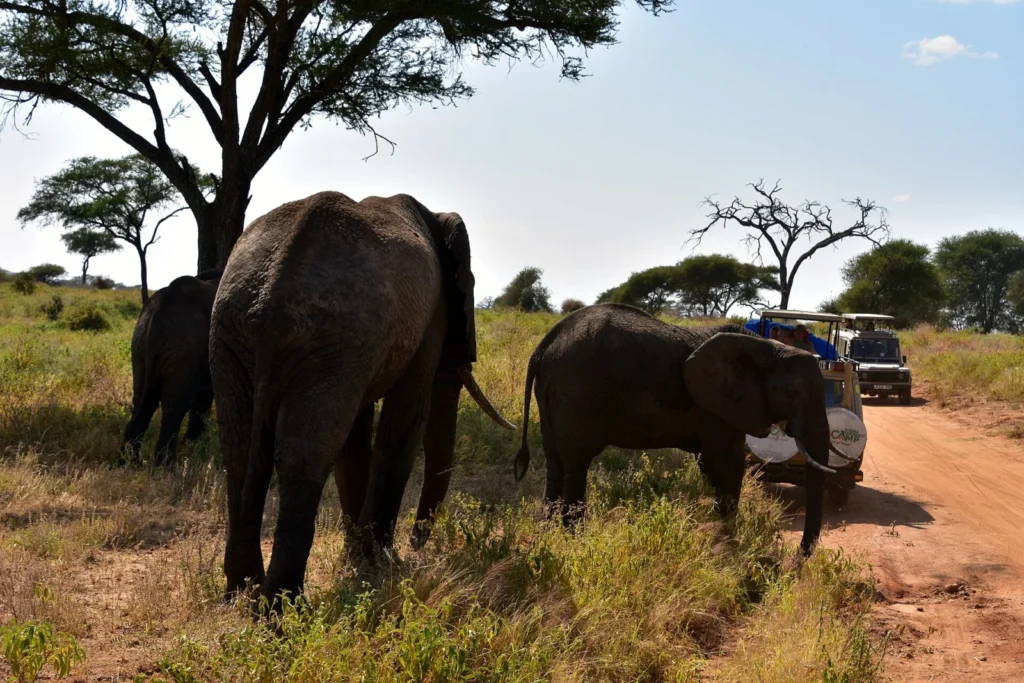
| Tarangire | According to TANAPA, the Tarangire River becomes a vital lifeline in the dry season, drawing large herds of elephants, giraffes, zebras and buffalo, and predators such as lions and cheetahs. |
| Ngorongoro Crater | The Ngorongoro Conservation Area Authority describes it as the world’s largest unbroken caldera, home to the Big Five. Good all year. |
| Lake Manyara | A short visit between Tarangire and Ngorongoro. See is Lake Manyara worth adding? |
Example 8-day July route
This outline gives the migration enough time without long backtracking. Flying out of the north saves a full day of driving.
| Day | Plan |
|---|---|
| 1 | Arrive at Kilimanjaro Airport; rest in Arusha |
| 2 | Tarangire for dry-season elephants |
| 3 | Ngorongoro Crater, then overnight in the highlands |
| 4–5 | Central Serengeti |
| 6–7 | Northern Serengeti, near the Mara River |
| 8 | Morning drive, then a light-aircraft flight back to Arusha |
Ready-made starting points: the 6-day Great Migration safari and the 7-day classic Serengeti safari. We adjust camp locations to where the herds are for your dates.
Climbing Kilimanjaro in July
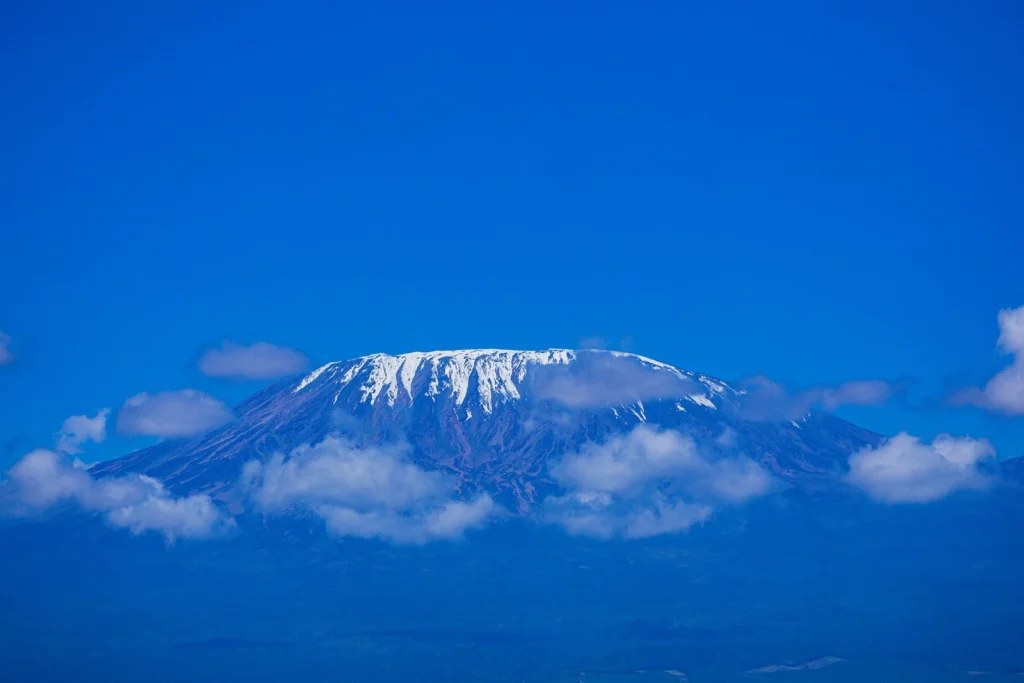
July is a good month to climb. TANAPA’s Kilimanjaro guide says the dry season runs from late June to September, when nights are cool and days are completely clear, which gives good climbing conditions. At 5,895 m, Kilimanjaro is the highest point in Africa (UNESCO), so summit night is well below freezing.
July is popular, so choose a quieter route and allow time to acclimatise. The 8-day Lemosho route is our first choice; see the Lemosho day-by-day guide and how to combine a climb with a safari.
Adding Zanzibar in July
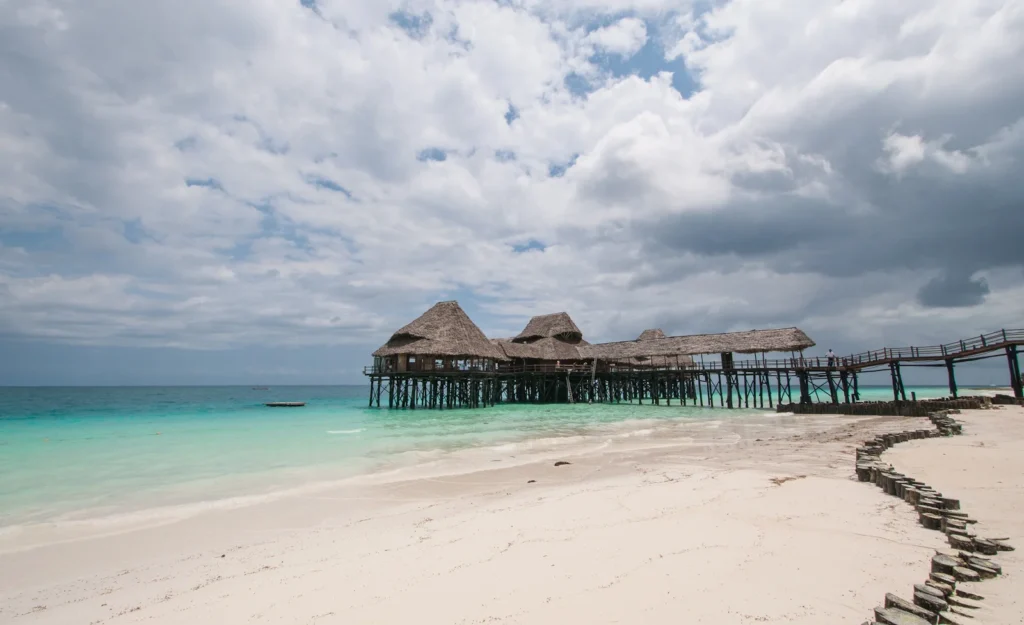
Zanzibar is pleasant in July. World Meteorological Organization data show average temperatures of 21.0–28.6°C, with about 4 mm of rain over 5 rain days, one of the driest months of the year. It is a good way to rest after an early-start safari. Try the 7-day Serengeti and Zanzibar combo, or read our Zanzibar honeymoon guide.
Since October 2026 every foreign visitor needs Tanzania’s mandatory US$44 inbound travel insurance, as well as a visa. See our Tanzania visa guide and the UK government travel advice.
Prices, crowds and booking
July is high season. Camps near the migration fill early, and many lodges charge peak rates. From our experience:
- Book 6–12 months ahead if you want a specific camp in the northern Serengeti.
- Early July is usually a little quieter than late July and August, when European and US school holidays begin.
- Park fees are fixed by the authorities, so the biggest price differences come from accommodation and flights. See Tanzania park fees 2027 and our safari cost guide.
- Respect crossing rules. TANAPA’s Mara River crossing guidelines require vehicles to stay in designated viewing areas and never block animals.
What to pack for July
- Warm layers: a fleece and a light down or windproof jacket for early drives and the crater rim.
- Dust protection: a buff or scarf, sunglasses and a cover for your camera.
- Sun care: a hat and high-SPF sunscreen; the midday sun is strong even when the air is cool.
- Neutral colours: khaki, olive and beige work best on game drives.
Use our full safari packing list, and the Kilimanjaro packing list if you are climbing.
Common questions
Is July a good month for the Great Migration?
Yes. In the dry season the herds depend on the Mara River, so July plans usually focus on the northern Serengeti. Exact locations change each year.
Will I see a river crossing in July?
Possibly, but it is never guaranteed. Crossings can start in July and are usually more frequent in August and September. Spending three or more nights in the north improves your chances.
Is July cold in Tanzania?
Days are warm, but mornings and nights are cool, especially in the highlands. The Serengeti range is 15–30°C according to TANAPA.
July or August for a Tanzania safari?
Both are excellent. July is often slightly quieter; August usually has more river crossings and more visitors. See Tanzania safari in August.
Is July good for climbing Kilimanjaro?
Yes. TANAPA lists late June to September as a dry season with clear days and good climbing conditions.
Plan your July safari
Send your dates and priorities through our enquiry form. We will suggest camps that match where the herds usually are in July, and explain every transfer.
Sources
Facts checked on 24 November 2026 against the official sources below. Wildlife movements and weather vary each year; this guide describes usual patterns, not a forecast.
- Tanzania National Parks (TANAPA): Serengeti National Park, Tarangire National Park, Mara River migration crossings guideline (PDF), Kilimanjaro National Park guide (PDF)
- UNESCO World Heritage Centre: Serengeti National Park, Kilimanjaro National Park
- Tanzania Meteorological Authority: Statement on the Status of Tanzania Climate in 2024 (PDF)
- World Meteorological Organization: Zanzibar climate normals, 1971–2000
- Ngorongoro Conservation Area Authority
- UK government: Tanzania entry requirements
Image credits
- File:Wildebeest_Migration_in_Serengeti_National_Park,_Tanzania.jpg — Daniel Rosengren / Wikimedia Commons · CC BY 4.0. Resized to WebP; display crop may apply.
- File:Elephants,_Tarangire_National_Park_(30)_(28592788662).jpg — Richard Mortel from Riyadh, Saudi Arabia / Wikimedia Commons · CC BY 2.0. Resized to WebP; display crop may apply.
- File:Natural_Landscape_of_Ngorongoro_Crater.jpg — Erasmus Kamugisha / Wikimedia Commons · CC BY-SA 4.0. Resized to WebP; display crop may apply.
- File:Mount_Kilimanjaro_Dormant_Volcano_In_United_Republic_Of_Tanzania_kibo_Mawenzi_Shira_Highest_Peaks-131.jpg — Antony Trivet / Wikimedia Commons · CC BY-SA 4.0. Resized to WebP; display crop may apply.
- File:Zazibar,_kendwa_beach_(8300433141).jpg — Yoni Lerner from Tel Aviv, Israel / Wikimedia Commons · CC BY 2.0. Resized to WebP; display crop may apply.